
On this page
What Is a Circular Economy?


The circular economy is a smarter way to use things and avoid waste. Nothing goes to waste. It works by keeping resources useful for as long as possible. Instead of using and throwing them out, we do three things:
- We design items so they can be reused, recycled, or composted.
- We fix, share, repurpose, and reuse what we already have.
- We help nature grow by improving soil, habitats, air, and water.
How Guelph Is Working Towards a Circular Economy
In 2021, we heard from the Guelph community that they want to move to a circular economy, and this became one of the key points in the City’s 2021 Solid Waste Management Master Plan (SWMMP). We are working to reach that goal. A circular city is designed to be sustainable, fair, and full of opportunity.
The City will try to avoid waste by keeping products and materials useful for as long as possible and protecting natural ecosystems.
According to the Council of Canadian Academies, Canada uses more materials, energy, and water than most countries. Most of the materials Canadians use (73%) ends up as waste, and only 6 out of every 100 things we use comes from reused materials. There are lots of opportunities for us to find creative ways in all parts of our community to reuse things and reduce waste, resource use, and pollution.
Actions You Can Take


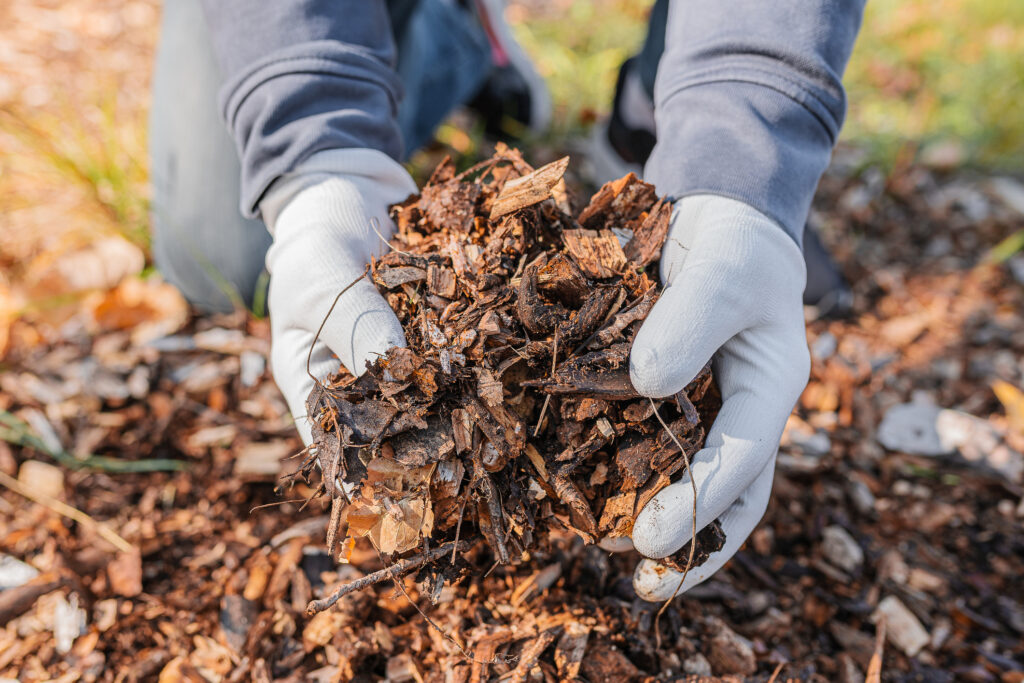


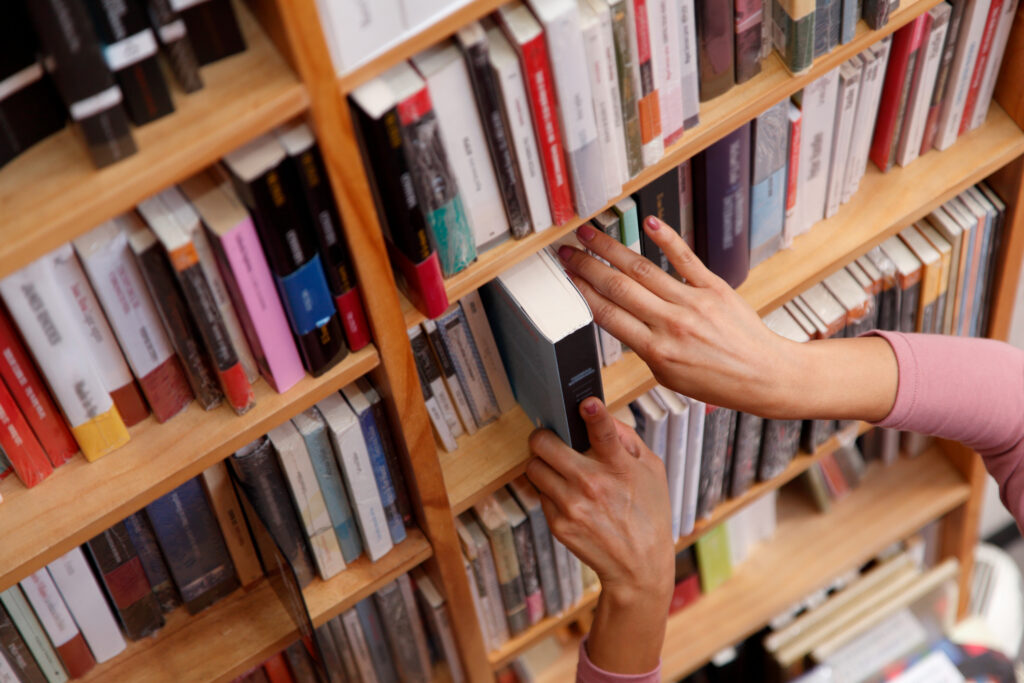
Borrow books or use the Makerspace at the Guelph Public Library.

Buy less. Avoid buying new things that break easily or get thrown away quickly. Instead, try to reuse, fix, or share items so they last longer and don’t end up as waste. Check out the Repair Cafe at Guelph Tool Library.

Buy intentionally by choosing things you really need, that are built to last, and that can be reused or fixed instead of thrown away. Borrow, share or rent less frequently used tools and items at Guelph Tool Library’s lending library.

Shop secondhand at thrift stores.
Circular Economy Roadmap
We are creating a plan for a circular economy in Guelph, with both short- and long-term actions. We will focus on setting clear goals and actions that will make the biggest impact for our community.
Circular economy roadmaps usually focus on key areas like:
- Food systems
- Reuse and sharing
- Buying practices
- How we build and manage spaces
- Restoring the natural environment
This roadmap supports Future Guelph: Strategic Plan 2024–2027, especially action 11.2: “Grow the circular economy by creating and implementing the circular economy framework.” More details to come as the project develops.
Solid Waste Management Master Plan
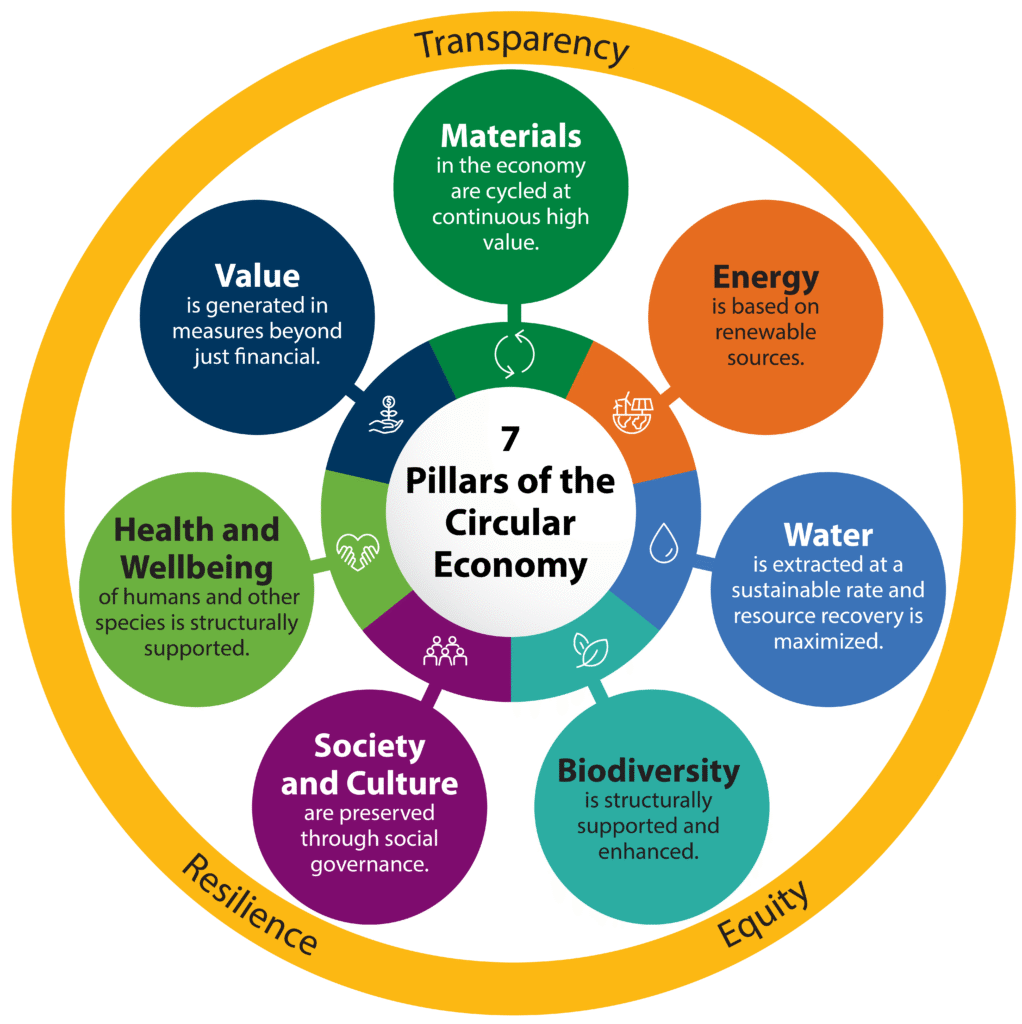
When we talk about building a circular economy, we often focus on managing materials in a way that creates less waste. But materials are connected to other important things—like energy, water, and social issues. That’s why the seven pillars of the circular economy look at the bigger picture —helping us think about how everything is connected, so we can make smarter choices that are better for people, the planet, and the future.
Funding to Support the Circular Food Economy
Food loss and waste is a big problem around the world—and right here at home. The United Nations Framework Convention on Climate Change (UNFCCC) says that wasted food causes 8 to 10% of the world’s greenhouse gas emissions every year.
Food waste doesn’t just harm the environment—it also makes it harder for people to get the food they need. That’s why reducing food loss and waste from businesses, institutions and organizations is a big opportunity to build a stronger, greener food system.
In Guelph-Wellington, the Our Food Future project found that 25,400 tonnes of food are thrown into landfills each year. About 16,500 tonnes of that come from the industrial, commercial, and institutional (IC&I) sector.
The City of Guelph received a $500,000 grant from the Federation of Canadian Municipalities’ Green Municipal Fund (GMF) to try new ways to cut food waste sent to landfill. We made three pilot projects:
- Food Redistribution: Extra food that is still safe to eat will be picked up and shared with local charities using an app called B12Give.
- Organics Collection: This project helps businesses and organizations send food waste for composting instead of the landfill.
- Energy Generation: This project looks at how leftover food from homes and businesses can be turned into clean energy using a process called anerobic digestion. This energy could help power homes and buildings.
This funding helps Guelph find better ways to extract value from food waste, especially from businesses and large organizations. It helps stop good food from being thrown away and makes it easier and cheaper for small and medium-sized businesses to get help with food waste that can’t be eaten. It also looks at how to turn food waste into something useful, like rich soils that help plants grow. r food that cannot be eaten. It also looks at ways to get the most value from turning food waste into something useful, like nutrient-rich compost.
Past Circular Economy Initiatives: Our Food Future and Coil
In 2017, Infrastructure Canada started the Smart Cities Challenge. They asked cities to come up with smart and creative ideas to solve local problems using data, teamwork, and new ideas. The City of Guelph and County of Wellington worked together to see how fixing the food system could help with big issues like climate change and food insecurity (not having enough healthy food).
Their idea was to use circular economy practices to:
- Create less waste
- Lower pollution
- Support new businesses
- Make it easier for people to get healthy food
In 2019, Guelph-Wellington won $10 million through the Smart Cities Challenge to start building a circular food economy in the region. The project, called Our Food Future, brought together over 100 local partners — including government, farmers, businesses, schools, and non-profits — to set goals and plan projects. One early success was helping 50 businesses start using circular practices earlier than expected.
In 2021, a new project called Circular Opportunity Innovation Launchpad (COIL) started with almost $5.5 million in funding from the Federal Economic Development Agency for Southern Ontario (FedDev Ontario).
A report called Seeding Circularity in Communities shares the story of the project, including big moments, and results across 16 different areas. It also includes stories from 18 local partners like the University of Guelph, Public Health, 10C Shared Space, Boundless Accelerator, and The SEED. These groups talk about what they learned and how communities can keep supporting the circular economy.
Resources
Solid Waste Management Master Plan
Guelph and the Circular Economy
FCM funding to support the circular food economy
Our Food Future and COIL Highlight Lessons and Successes
Circular Opportunity Innovation Launchpad – Zero Waste Economic Transformation Lab
Single-use items reduction strategy and ban
For More Information
Solid Waste Resources
519-767-0598; TTY: 519-826-9771
[email protected]